Open real archives
The Federal Register (every decree since 1936), the Congressional Record (back to 1873), the papers of the presidency, Reddit's community archive, decades of television news — real public APIs, most needing no key at all.
Never write the code yourself
You describe what you want in plain words; Gemini writes the Python; you run it. When something breaks, you paste the error and it gets fixed. The rhythm of the whole course: describe, run, fix, keep.
End with evidence
Every lesson lands a citable dataset: 267 floor speeches with full text, 231 Reddit posts across two languages, a viewing guide that opens the actual 2010 CNN broadcasts. The machine gathers the corpus; the judgment — what to ask, what to keep, what to discard — stays yours.
About this course
Each lesson opens one real public archive and walks the same arc: a real question, a query that translates it, and a spreadsheet of primary sources you can read, judge, and cite. You'll pull every presidential document about Mexico from 2018, the week of a State of the Union with the full 39,000-character speech — then make the machine read it for you and hand back only the sentences that matter. You'll compare how English-speaking and Spanish-speaking Reddit talked about the same collapse, and trace TV coverage of the Haiti earthquake down to the actual, watchable, captioned broadcasts. Everything runs on Google's free tier — Colab and Gemini. No credit card; an anonymous account works if you prefer privacy; a US .edu address unlocks the advanced tier free; and when your research outgrows the free tier, the same code is one step from scaling. Investigar is the same programmatic skill as Crear and Motor, pointed at evidence — and it's where Entender's 'verify instead of defer' gets its tools. No prior coding required: Gemini writes every line, and you keep every script that works. The library keeps growing — new archives are in production now.
Meet the Creator
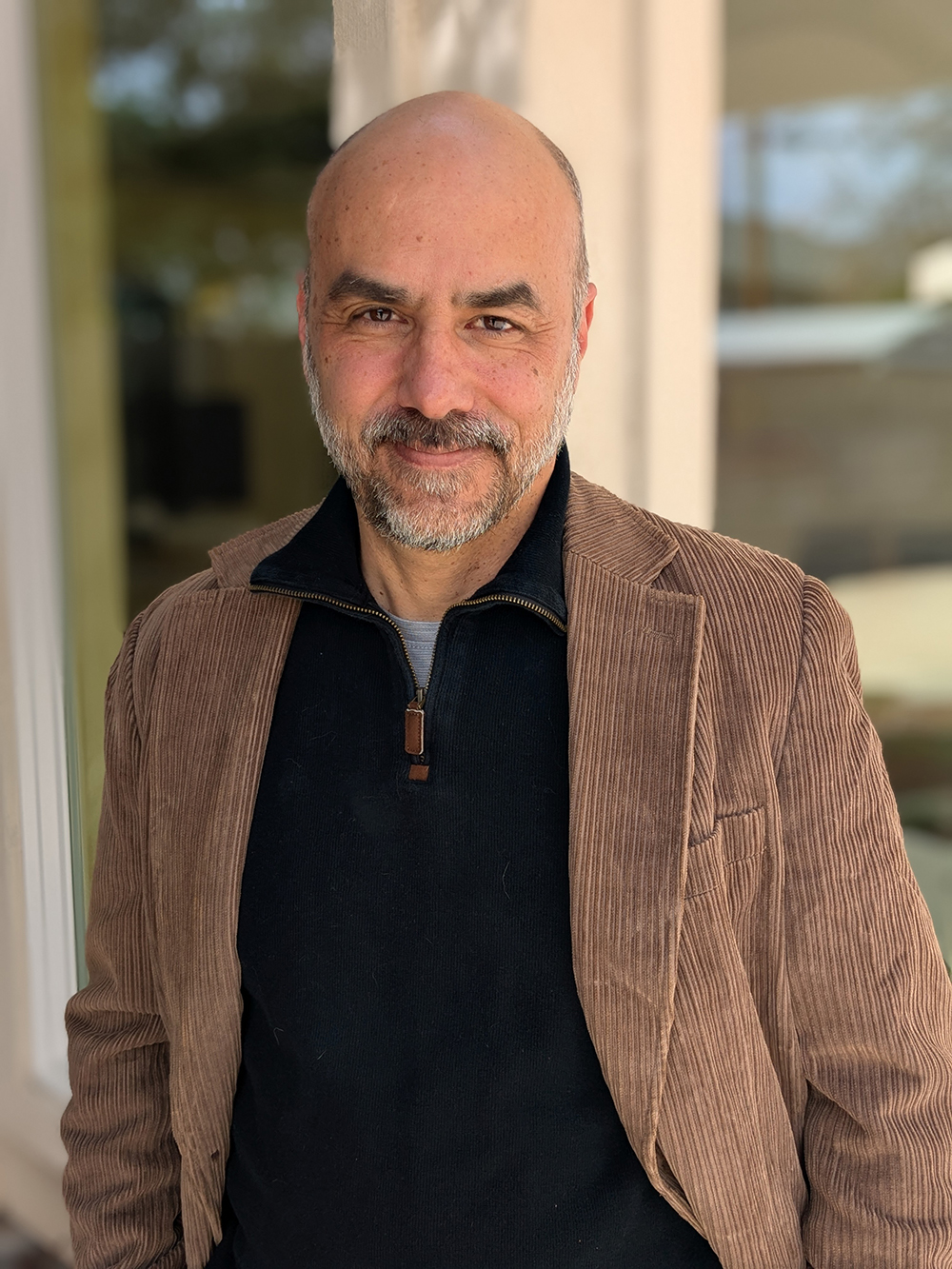
Dr. Diego Bonilla is a Full Professor of Communication Studies at Sacramento State and teaches graduate courses at UNAM in Mexico City. In 2026, the CSU Chancellor's Office invited him to speak with media as a faculty expert for the release of its systemwide AI survey. His work on digital literacy precedes the current AI moment by two decades. In 2007 he served on the ETS panel that set the passing standards for iSkills, the national assessment of information and technology literacy, and on the California leadership roundtable whose policy framework preceded the state's 2009 executive order on digital literacy. TertulIA grew out of the faculty learning community on AI literacy he directed at Sacramento State, where these lessons were first taught to professors. Every lesson is his own — designed from his teaching and his research, and offered in both English and Spanish. He also maintains ainews.social, a weekly review of AI developments read through communication theory; his broader work in film, electronic literature, and research is collected at hypergraphia.com.
Curriculum
-
1
-
(Included in full purchase)
Before you start
-
(Included in full purchase)
The Federal Register API
-
(Included in full purchase)
The GovInfo API — The Congressional Record
-
(Included in full purchase)
The GovInfo API — The Compilation of Presidential Documents
-
(Included in full purchase)
The PullPush API — Reddit's Archive
-
(Included in full purchase)
The Internet Archive TV News Archive
-
(Included in full purchase)
The Media Cloud API
-
(Included in full purchase)
The American Presidency Project
-
(Included in full purchase)
The GDELT TV API
-
(Included in full purchase)
The CNN Transcripts Archive
-
(Included in full purchase)
Ready to cite the record?
This course is part of TertulIA Complete — one membership, every course, in plain language, with a working take-home from every lesson. The library keeps growing; your membership always has the current set.
$10.00 / month