

See the ten lines
The chat was never magic: a model, your words in one slot, and settings the interface quietly fixed for you. Here you hold them yourself — which model, the temperature knob the app never mentions, grounding, saving.

Own every engine
Image (an image is raw bytes until your code saves it), music (the shortest code in the course — full music from one sentence), voice (a voice is one swappable parameter — and why that ended voice as proof), video (five knobs, including the safety policy, which turns out to be an editable string).

Understand what code changes
Because it's code, it loops: the call that made one image can make ten thousand. Each lesson faces that honestly — job displacement, voice-clone scams, and the question every video now raises: filmed, or generated?
About this course
Six lessons, one per engine plus the capstone. Each takes a surface you've already used — text, image, music, voice, video — and opens it from the inside, in a Colab notebook you run with your own free key, changing one line at a time: the prompt, the voice name, the temperature, the aspect ratio, the safety string. The capstone is the Orchestrator: all five engines in one notebook, driven by a single line — a topic — where a director model writes every downstream prompt and ffmpeg fuses the results into one finished video. Everything runs on Google's free tier — Colab, AI Studio, and the generative models. No credit card; an anonymous account works if you prefer privacy; a US .edu address unlocks the advanced tier free; and when you're ready to scale, the same code is one step from the paid tier. Motor is Crear with the casing off: Crear teaches the making, Motor hands you the engines underneath it. Code is introduced gently and every line is explained — you need no computer-science background, only the willingness to run a notebook and change a line.
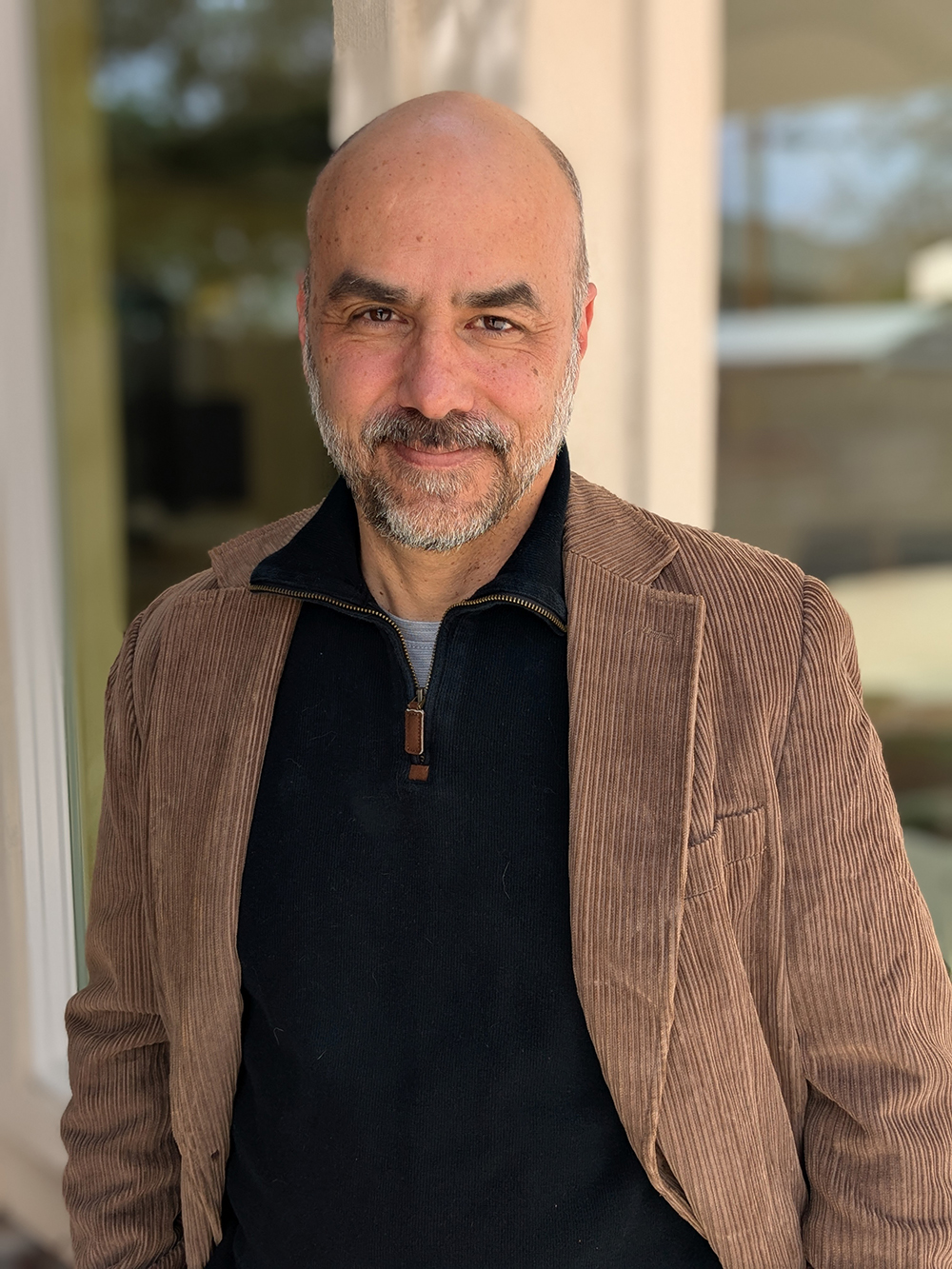
Meet the Creator
Dr. Diego Bonilla is a Full Professor of Communication Studies at Sacramento State and teaches graduate courses at UNAM in Mexico City. In 2026, the CSU Chancellor's Office invited him to speak with media as a faculty expert for the release of its systemwide AI survey. His work on digital literacy precedes the current AI moment by two decades. In 2007 he served on the ETS panel that set the passing standards for iSkills, the national assessment of information and technology literacy, and on the California leadership roundtable whose policy framework preceded the state's 2009 executive order on digital literacy. TertulIA grew out of the faculty learning community on AI literacy he directed at Sacramento State, where these lessons were first taught to professors. Every lesson is his own — designed from his teaching and his research, and offered in both English and Spanish. He also maintains ainews.social, a weekly review of AI developments read through communication theory; his broader work in film, electronic literature, and research is collected at hypergraphia.com.
Curriculum
-
1
-
(Included in full purchase)
Before you start
-
(Included in full purchase)
The Text Engine
-
(Included in full purchase)
The Image Engine
-
(Included in full purchase)
The Music Engine
-
(Included in full purchase)
The Voice Engine
-
(Included in full purchase)
The Video Engine
-
(Included in full purchase)
Ready to open the engine?
This course is part of TertulIA Complete — one membership, every course, in plain language, with a working take-home from every lesson. The library keeps growing; your membership always has the current set.
$10.00 / month